Delhi's air quality drops ‘very poor’ category; AQI crosses over 300


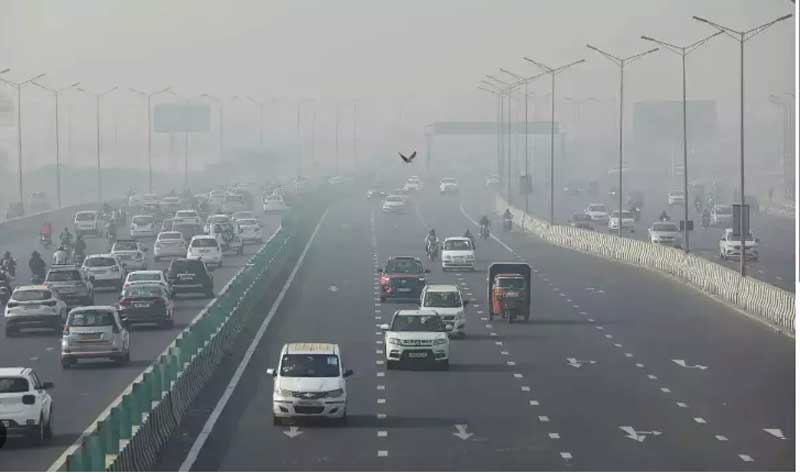
As per the Central Pollution Control Board (CPCB), several areas like Anand Vihar, Najafgarh, RK Puram, and Lodhi Road have experienced a sharp decline in air quality. After the rain, the pollution levels became better and reached into the category of “moderate” to “satisfactory." During that period, PM10 (coarse dust particles) was the main pollutant.
Since Thursday morning, pollution levels took a U-turn, and PM2.5—fine, harmful particles that are much smaller than PM10—became the dominant pollutant. These small particles are harmful because they are able to reach into the lungs and bloodstream as well. Doctors warn that contact with PM2.5 is very dangerous, causing severe breathing and heart problems by the time.
With the drop in air quality, the Delhi Pollution Control Committee (DPCC) wants to solve this issue with the help of science and technology. Therefore, they have contacted experts from the Indian Institutes of Technology (IITs) and the India Meteorological Department (IMD). The DPCC has been looking to overcome the pollution issue through scientific and innovative ways.