Growing Eggplants In Containers : Grow Glossy Eggplants at Home: The Ultimate Summer Gardening Guide


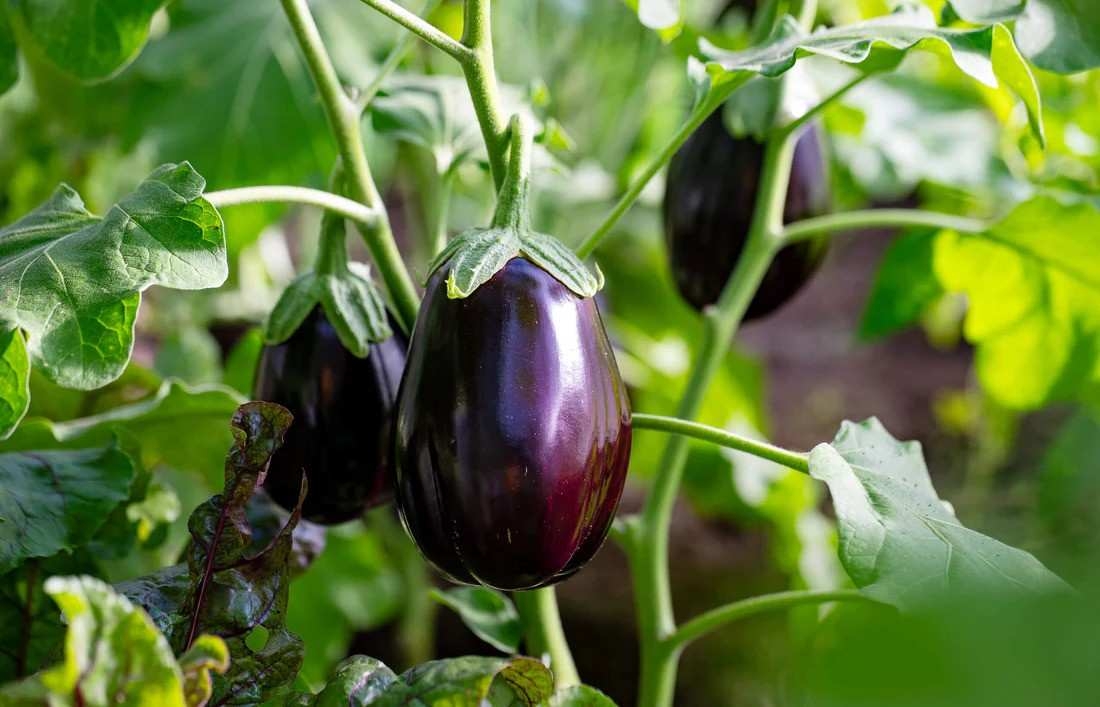
Eggplants are warm-season vegetables from the Nightshade family, just like tomatoes and peppers. They love sunshine and grow fastest when temperatures stay between 70°F and 85°F (21°C–30°C).
Because they need warm soil, eggplants are usually purchased as 6- to 8-week-old transplants (or started indoors about 2 months in advance) to get a head start. Raised beds enriched with composted manure are an ideal growing place for eggplants because the soil warms more quickly. Eggplants are also great for containers and make lovely ornamental borders. In fact, there are quite a few ornamental eggplant varieties available today whose inedible fruit have attractive variegated patterns.
Though eggplant fruit are usually a beautiful dark purple color, they can also be white, pink, green, black, or variegated purple-white. Their size and shape vary as well, ranging from the large, gourd-shaped eggplants you’ll commonly find in stores to the more exotic, slender Japanese eggplant.
Where to Plant Egglant
For the best results, plant eggplant in a location that gets full sun—at least 6 to 8 hours of direct sunlight per day.
Eggplants grow best in a well-draining sandy loam or loam soil that is fairly high in organic matter. To improve soil fertility, mix 1 inch of well-rotted manure, compost, or a general fertilizer such as 5-10-5 throughout the planting bed about a week before planting. (Apply 2 to 3 pounds per 100 square feet. Or, apply 1¼ pounds of 5-10-5 per 10 feet of row when the row spacing is 4 feet.) Soil pH should be between 5.8 and 6.5 for best growth.
Growing Eggplant in Containers
If you’re growing eggplant in pots, use a dark-colored container that will absorb more sunlight. Put one plant per 5-gallon (or larger) pot in full sun and outdoors so it can be pollinated. Use a premium potting mix to avoid disease. Raised beds, which warm more quickly than ground soil, are also ideal for growing eggplant.
When to Plant Eggplant
Start seeds indoors in flats or peat pots 6 to 8 weeks prior to the last spring frost date. Seeds germinate quickly at temperatures between 70° to 90°F (21° to 32°C). Alternatively, buy 6- to 8-week-old nursery transplants just before planting.
Do not plant eggplant transplants into the garden until well after the last threat of frost.
If purchasing transplants: Buy high-quality specimens. Do not purchase tall, spindly plants or young plants that already have blossoms (ideally, young plants should spend energy becoming established before they begin flowering).
How to Plant Eggplant
Start seeds indoors, sowing them ¼ inch deep in flats or peat pots.
After the risk of the last spring frost has passed and daytime temperatures are 70° to 75°F (60° to 65°F at night), set seedlings in holes 24 to 30 inches apart in rows 3 feet apart. Use a covering of black plastic mulch to warm soils before setting out transplants if soil temperatures aren’t yet high enough.
Immediately after planting (in-ground or pot), set 24-inch-high stakes 1 to 2 inches from each plant or use cages to provide support and avoid disturbing the soil or roots later. Eggplant will fall over when laden with fruit.
After planting, water well. Add a layer of mulch to retain moisture and suppress weeds.
If you live in a cold climate, consider using row covers to keep the young eggplants warm and sheltered. On warm days, open the ends of the row covers so that bees may pollinate the eggplants’ flowers.
Growing
Water well to moisten the soil to a depth of at least 6 inches so the soil is moist but never soggy. Consistent watering is best, and a soaker hose or drip system at ground level is ideal.
The critical period for moisture is during fruit set and fruit development. Strangely shaped eggplants result from inconsistent or inadequate watering.
Mulching can help to provide uniform moisture, conserve water, and reduce weeds.
Apply a balanced fertilizer every 2 weeks or so.
Note: Too much nitrogen may cause excessive vegetative growth. If you are using plastic mulch, apply fertilizer through drip irrigation or apply fertilizer to the side of the row.
For bigger fruits, restrict to five or six per plant, pinching off the extra flowers that develop.
Eggplant may fall over once loaded with fruit! Be sure to stake tall plants or use a cage to keep the plants upright. If growing eggplant in containers, stake the stems before the fruit forms.
For a bushier plant, pinch out the terminal growing points, the central points on a plant from which new shoots and leaves grow. Look for the newest (and usually smallest) leaves at the center of the plant and pinch out the bud forming there.
Eggplants are susceptible to temperature fluctuations: Cool nights (below 55°F/13°C) or hot days (above 95°F/35°C) can cause poor fruiting. Cover plants on cold nights and provide shade (e.g., a beach umbrella) on hot, sunny days. Cold also impairs ripening.
Growing Eggplants in Containers
Eggplant thrives when planted in pots. Prepare one 5-gallon container per 3-plus-foot-tall plant or a 2-gallon pot for dwarf/ miniatures up to 2 feet tall with potting mix and compost or organic matter, as well as a slow-release fertilizer.
Eggplants are a warm-season crop. Start seeds indoors 6 to 8 weeks before the last frost date or purchase seedlings. Plant outside when the evening temperature is consistently at least 65°F. If no compost or organic matter is added to the potting mix, fertilize seedlings with a (low-nitrogen) 5-10-10 formula. Provide support (a tomato cage or wooden stake, with soft ties) for larger plants.
Provide 6 to 8 hours of sun per day. Water consistently but not constantly; allow the plant to dry somewhat between waterings (inconsistent watering may result in irregular fruit shapes). When fruit appears, begin using a 10-10-10 formula every 10 to 14 days. Protect from temperatures below 55°F with cover or by moving.
Harvesting
Harvest eggplant 65 to 80 days after transplanting, depending on the variety. When starting from seed, expect 100 to 120 days to maturity. July, August, and September (even into October) are all harvest months for eggplant, depending on where you live and the variety you planted.
Eggplant tastes best when harvested young as soon as it’s dark and glossy purple. Fruits are ripe when their skin doesn’t rebound to gentle pressure from your finger. If you cut into an eggplant and find an abundance of brown seeds, it’s already too late.
Harvest early and often, and the plant will be quite prolific. Once ready, check on your eggplants every 2 to 3 days.
When harvesting, do not pull the fruit (it won’t come off). With a sharp knife, cut through the tough stem above the green cap, or calyx, on the top. The calyx can be prickly, so you will want to wear gloves.
You can cut these plants back like peppers if your season is long enough for a second crop.
Common Eggplant Problems
Temperature:
If the flowers on your eggplants form but then fall off, or if fruit does not develop, the most likely problem is that the temperatures are too cold.
If the fruits are small and not growing, it’s also probably too cold. Eggplants like it hot! Daytime temperatures need to be 80° to 90°F and night time temperatures should not go below 60° to 65°F or their grow is very slow to stalled. Wait for warmer temperatures; you may have to replant, depending on the variety.
Inconsistent watering
Strangely-shaped eggplant are the result of inconsistent watering or low moisture.