Rose Plant Disease Care : Black Spot Disease in Roses: Symptoms, Causes and Easy Prevention Tips
Total Views |


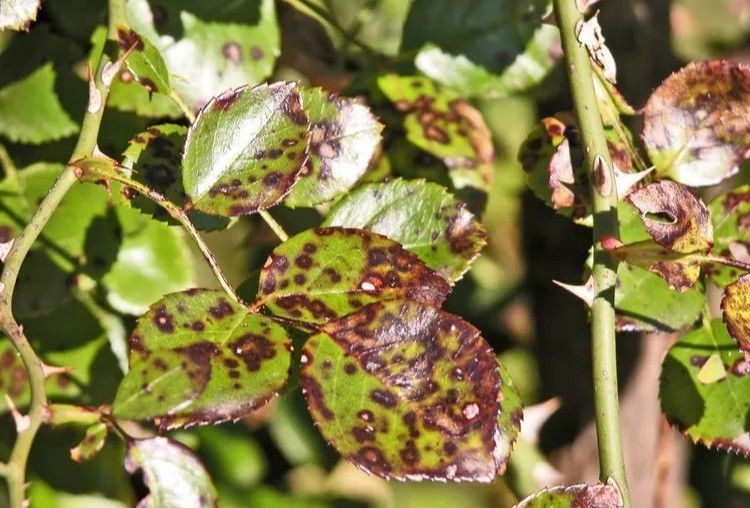
Rose Plant Disease Care : Black spot is the most common and destructive fungal diseases affecting rose. It causes dark spots on their leaves, leading to yellowing, premature leaf drop . Reduced flowering, and weakened plants. The disease spreads rapidly in cool, humid, and wet conditions, making early identification and proper management essential for healthy rose growth.
Symptoms of Black Spot
The first signs of black spot usually appear as small, circular black spots on the upper surface of rose leaves
• Circular black spots, which usually occurs on the upper sides of leaves but also develops on the undersides. These spots enlarge with time and move from the lower leaves upward.
• Ragged or feathery outer margins, usually surrounded by a ring of yellow.
• Purple spots on new, young canes.
How Black Spot Damages Roses
Affected leaves often fall off the plants; if left unchecked, the entire plant may defoliate.2 The loss of leaves reduces the plant's ability to photosynthesize food, weakening the bush and causing a decline in rose production.
The fungus also infects young canes, causing dark purple blisters on the canes.1 Infected plants will set fewer flower buds. Without leaves, they become stressed and susceptible to more problems.
Reasons Of Black Spot on Roses
Black spot is caused by a fungal pathogen whose spores survive on infected leaves and stems during winter. The fungal spores that cause black spots to germinate in the springtime are dispersed by splashing water from rain and watering, as well as wind that transports spores. Removing and destroying infected parts is essential. Otherwise, your roses will get more black spots.
If you experience an extremely hot summer in July and August, the high temperatures may limit the development of future spores.
How to Prevent Black Spot on Roses
True for avoiding any plant disease, a healthy, vigorous rose bush is less susceptible to problems.
Proper Lighting
Roses prefer a sunny location with well-draining soil and regular, weekly watering. Plant roses where they receive morning sun, which helps dry moisture from the leaves. Full, all-day sun is best.
Good Air Flow
Provide good air circulation around and through your rose plants. Do not plant your roses too close to other plants. If the plant gets too dense and air cannot get through, prune to open the spaces between canes.
By providing good air circulation and ensuring canes don't cross, black spot will have a harder time spreading.
Proper Watering
Avoid getting the leaves wet while watering. There is not much you can do about rain, but avoid overhead sprinklers and focus water directly on the plant's roots. Consider installing drip tape irrigation around your roses.
Pruning
Cut back roses with black spot. The disease starts spreading within 10 days of the first symptoms.2 Spores spread by water. They remain on leaves and stems and reinfect whenever conditions are favorable.
Remove any infected leaves and always clean thoroughly each fall. Remove and dispose of any remaining leaves when you do your dormant rose pruning in late winter or early spring. Prune out any canes showing signs of infection, 6 to 8 inches below the infection, in dry weather.
Disinfect your pruners with a 10 percent bleach solution or alcohol between cuts. Dispose of infected leaves and canes. Make sure to clean up fallen leaves and dispose of them properly.
Mulch
Apply a thick layer of mulch around the plant's base. Mulch prevents soil from splashing up on the plant, and if the spores are present in the soil, it will help stop black spot from spreading on the roses.
Ensure the mulch doesn't contain rotting wood, since artillery fungus develops in a moist environment.
Topical Sprays for Treatment and Prevention
There are commercial and homemade DIY solutions to prevent the spread of black spot. The treatment may seem time-consuming. It is a pesky problem that can only be slowed down, as nothing can fully kill black spot on roses.
After treating the plant, you must spray it weekly, starting in early spring and after a heavy rain, to prevent black spots from recurring. Spray the entire plant, including the top and bottom of the leaves and the stems. Consider using a dormant spray over winter to smother overwintering spores.
• Bordeaux mix: This fungicide contains copper sulfate and hydrated lime. It is applied in powder form or mixed with water and sprayed. Bordeaux mix also repels some insect pests, but it may burn plant leaves. It is generally used as a preventive step in the spring before plants leaf out.
• Insecticidal soaps with added fungicide: Add an organic fungicide, typically sulfur, to regular insecticidal soap. The soap coats the leaves and helps the fungicide adhere to the plant.
• Neem oil: Neem is an organic fungicide and pesticide derived from the seeds of the neem tree. It gets inside the plant's system, so you do not need to worry about coating everything or reapplying after rain. However, it risks burning plant leaves in the hot sun.4 You should not apply neem oil within two weeks of using a sulfur product.
• Sulfur: Sulfur prevents fungus diseases. It is also used to control several insect pests. Sulfur comes as a finely ground powder. If you prefer to spray it on, look for one that is labeled as "wettable," so that it will mix with water.
Home Remedies for Black Spot on Roses
Organic remedies may work for some gardeners. Experimenting is encouraged if you keep the habit of frequently spraying roses to prevent black spots.
• Baking soda spray: Dissolve 1 teaspoon of baking soda in 1 quart of warm water. Add up to 1 teaspoon of liquid soap. Spray leaves thoroughly. This mixture works as a preventive and offers some protection from powdery mildew.
• Vinegar: A vinegar-based recipe may be effective and safe for all rose problems, including black spot. Mix a tablespoon of white distilled vinegar with one cup of water, 1 and 1/2 tablespoons of baking soda, 1 tablespoon of dish soap, and 1 tablespoon of vegetable oil.
Add that mixture to a gallon of water, spray it on the rose foliage, and reapply it every week to 10 days, especially after a rainstorm.
• Milk: Another remedy is a spray mix of one part milk to two parts water, applied weekly to control black spot. This won't kill the spores, but it may slow down the spread and helps you get a handle on the problem.
• Hydrogen peroxide: A mix of 1 tablespoon of hydrogen peroxide (3 percent concentration) and 1 cup of water may also work well on black spot.